Getting nine people to agree on anything is difficult. When it’s a major technology purchase, things get even more complicated.
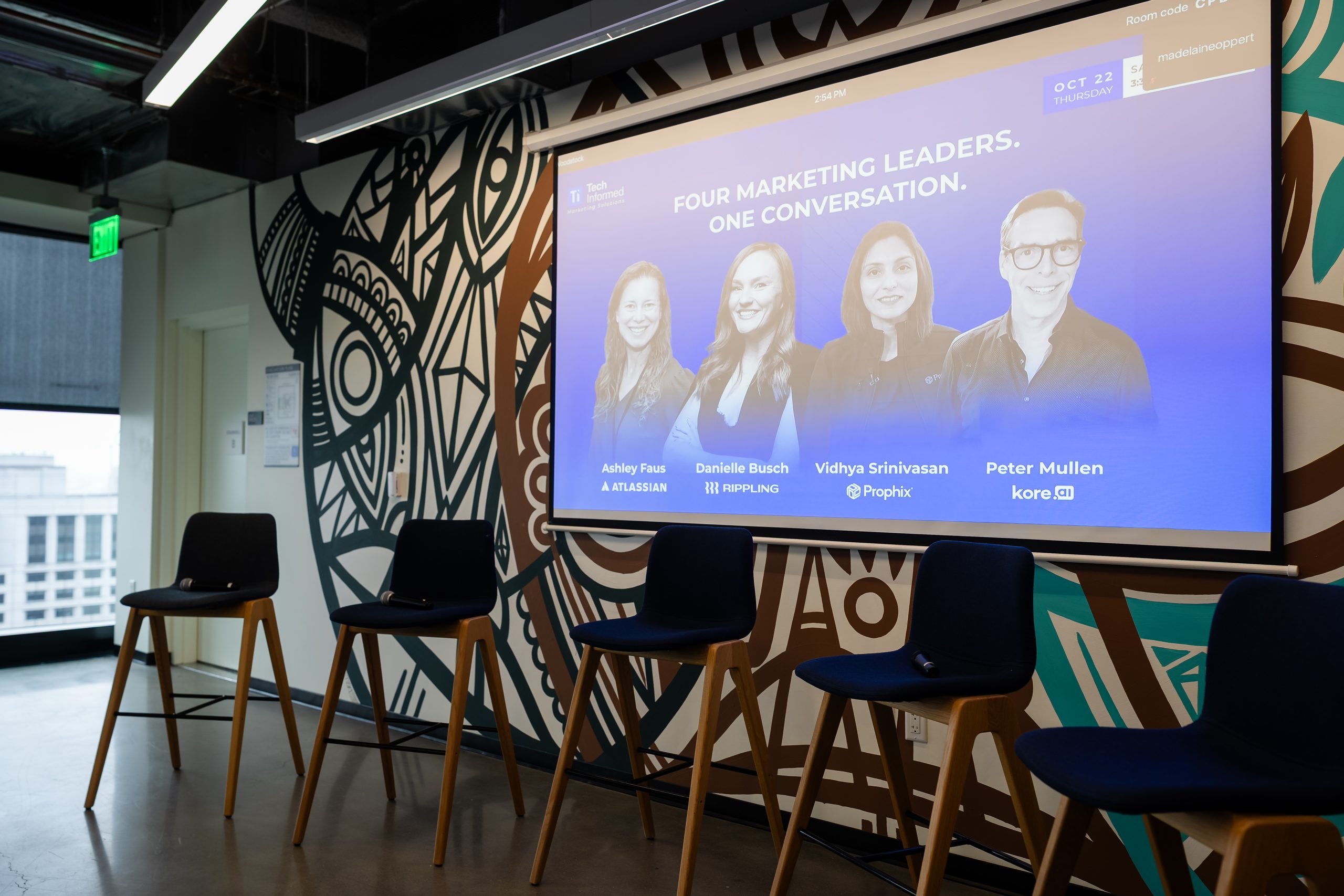
Last Thursday, around 40 senior technology marketers joined us at Demandbase HQ in San Francisco to tackle this very expensive headache. With marketing leaders from Atlassian, Rippling, Prophix and kore.ai sharing their experiences, the conversation covered everything from overlooked decision-makers to deals that simply vanish.
Here’s what we learned.
Key takeaways
- Market to the decision process rather than to individual personas.
- Junior researchers often decide who makes the shortlist.
- Traditional SEO still drives discovery and supports AI search.
- Brand gets you invited in, and proof points close the deal.
- Many deals disappear without a decision, so remarketing deserves a second look.
- Excessive personalization creates content nobody uses.
A closer look at the nine-stakeholder problem
The panel drew on early and unreleased findings from TechInformed’s upcoming Voice of the Buyer 2026 research, a global survey of 1,000 technology buyers. As our event name (almost) suggests, the average enterprise technology purchase now involves 8.2 people, 59% of buyers say that number has grown over the past year, and only 13% of decisions are driven by a single champion.
Moderated by Yogesh Shah, CEO of iResearch Services, the conversation brought together Ashley Faus (Head of Lifecycle Marketing, Atlassian), Danielle Busch (Senior Director of Performance Marketing, Rippling), Vidhya Srinivasan (CMO, Prophix) and Peter Mullen (CMO, kore.ai).
Between them, they’ve spent years marketing to complex buying committees. They’ve also sat on the other side of the table, making those decisions themselves.
How the buying committee is evolving
AI is pulling new people into the deal. Now that AI sits inside so many products, security, compliance, legal, risk and data teams all want a say, and they need to see the safeguards before they’ll sign off. Buyers are also doing far more of their research online before they speak to sales, which makes it harder to see who’s engaging and how they connect to the wider group.
Prophix CMO Vidhya Srinivasan said every stakeholder looks at a purchase differently, so messaging has to work for the whole group. “Don’t market to a persona, market to a decision.”
Who marketers are overlooking in the buying committee
It’s easy to focus on the C-suite and forget who does the groundwork. Senior leaders often hand vendor research to someone more junior on their team, and that person decides who makes the shortlist. Ashley Faus, Head of Lifecycle Marketing at Atlassian, said vendors too often dismiss the junior staff who do the early research. “If you reject the associate title for being ‘too junior,’ you have taken yourself off the shortlist.”
Search is another blind spot. Plenty of teams are pouring effort into AI search and neglecting Google, even though it’s still where most buyers start. Danielle Busch of Rippling said the two don’t have to compete. “What was good for old-school SEO is also good for new-school AEO.”
How marketers build trust before buyers engage with sales
Buyers want to see familiar faces and a consistent story long before a sales call. More companies are putting their executives, and increasingly their marketing and product leaders, out front with thought leadership to make that happen. Vidhya said brand and proof do different jobs. “Brand invites them in. The proof points are what ends up closing the deal.”
Our new research on today’s buying committees is coming very soon. While you wait, read the latest Voice of the Buyer report to see how technology buyers research, shortlist and choose vendors.
Why good deals stall and how to win them back
Kore.ai CMO Peter Mullen said most of the deals his team loses don’t go to a competitor. “We don’t lose decisions, they just vaporize.” To stay visible while big deals sit in the pipeline, his team keeps its people posting on LinkedIn so the brand stays in front of every stakeholder.
Danielle said the deals most teams write off are worth a second look, since those buyers already liked you enough to start talking. Winning them back usually costs less than finding someone new. “The real value is that they were interested at one point.”
Which marketing fundamentals matter most in the age of AI
When we asked what still matters with AI everywhere, nobody reached for a new tool or tactic. For Ashley, “Marketing is about people,” while Danielle came back to the numbers. “Data rules assumptions.”
Vidhya pointed out that with so many teams using the same AI tools, a lot of content now sounds identical. Her advice was to sharpen your message until it says something competitors can’t.
What the panel would change tomorrow
We ended by asking each panelist for one thing the room could do differently tomorrow. Ashley said customers shouldn’t have to deal with your internal silos. “Don’t ship your org chart.” Danielle warned that a lot of so-called personalization is just fragmentation, so let the data tell you what content you need.
Peter’s tip was about focus. “Get your list of the 10 most important things you’re doing. Be honest. Cut 3 of them. Add 1 new thing you’re doing.”
Join us at the next one
This is only a fraction of the conversation from The nine-stakeholder problem: Why knowing your buying committee isn’t enough, and much of the value came from the open discussion in the room. Throughout the session, Yogesh shared unreleased findings from our Voice of the Buyer 2026 research, covering how buyers use AI to build their shortlists, which voices they trust most and what slows a decision down. The full report is coming soon, so keep an eye out for it, and for our next event.
Until then, you can catch up on our on-demand B2B lead generation webinars. Every month, senior marketing leaders talk through the challenges this panel raised, from reaching buyers who research with AI to turning buyer signals into sales meetings.


FAQ
Who is on a typical B2B technology buying committee?
TechInformed’s Voice of the Buyer 2026 research found that an average of 8.2 people are involved in an enterprise technology purchase. IT and the CIO or CTO are most often involved, followed by procurement and finance. With AI now built into so many products, security, compliance, legal, risk and data teams are getting involved more often too.
Why should B2B marketers pay attention to junior employees?
Senior leaders often hand vendor research to junior members of their team, and those people decide which vendors make the shortlist. They may not sign off on the purchase, but if your marketing ignores them, you may never make it into the final conversation.
Why do so many B2B deals end in no decision?
Deals often stall when new stakeholders join late, when the group can’t agree, or when momentum fades in a long sales cycle. Keeping your brand visible through employee thought leadership, and remarketing to stalled or closed-lost opportunities, can bring those buyers back into the conversation.
Is SEO still important now that buyers use AI search?
Yes. Google is still a major discovery channel for B2B buyers, and the same practices that help with traditional SEO, such as clear FAQs and credible citations, also improve your visibility in AI search. The key is understanding where AI search fits into your buyers’ journey rather than replacing one with the other.