B2B buyers are harder to reach, their journeys are less predictable, and plenty of marketing teams are doing more work for less return. That was topic focus of last week’s live discussion, and it’s one most demand gen leaders are often asking themselves.
Key takeaways
- 83% of B2B purchase activity happens before buyers ever engage sales, and 92% of buyers purchase from their original shortlist, which means the campaigns that matter most are the ones buyers never tell you about.
- 40 to 60% of enterprise B2B deals stall because key stakeholders are never effectively reached, a reminder that getting the lead isn’t the same as closing the deal.
- Content now has two audiences: the humans reading it and the LLMs deciding whether you’re worth citing at all.
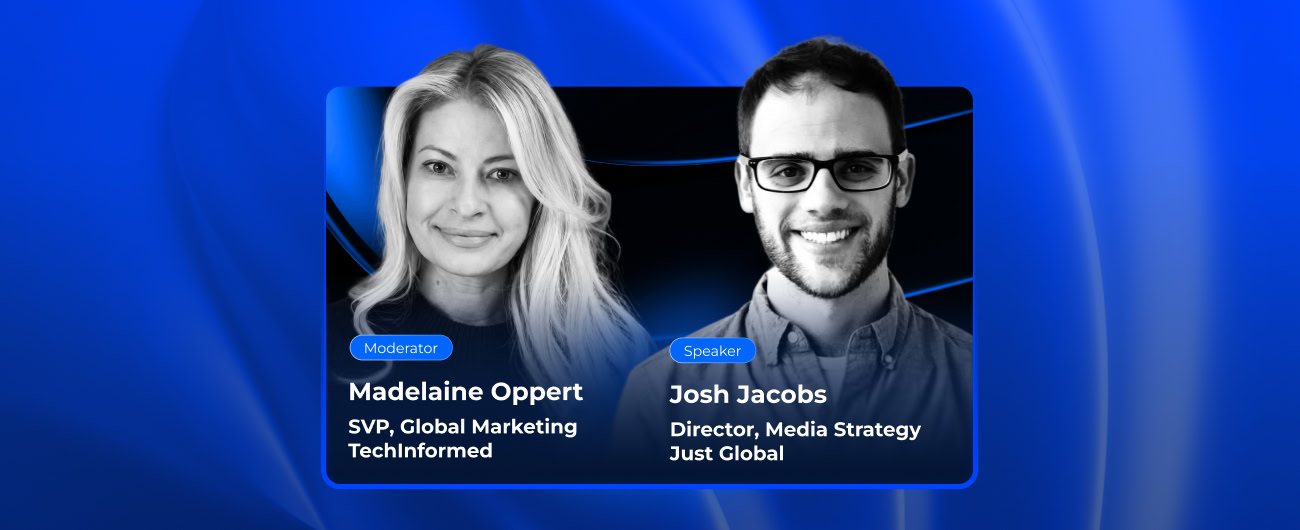
In our recent live session, Are we still building B2B campaigns for a buyer journey that no longer exists?, host Madelaine Oppert, SVP of Global Marketing at TechInformed, was joined by Josh Jacobs, Director of Media Strategy at Just Global to discuss the modern buyer journey.
Josh brings more than 10 years of experience across both B2B and B2C media, with the past seven spent helping clients build campaigns across cybersecurity, cloud, software, and insurance. Josh spends his days in the media mix and measurement layer of campaigns most marketers only see the output of, which gave the conversation a practical, buy-side view of what’s working right now versus what just looks like it is.
It was a fast-moving 40 minutes covering everything from campaign briefs to brand’s new role in an AI-influenced buyer journey. Here’s what stood out.
Buyer journeys have changed, and so has what it takes to stay visible along the way. Watch how Just Global is helping clients rethink their media mix and measurement in response.
The buyer journey: what worked a year ago won’t work now
When asked about the last campaign brief that genuinely excited him, Josh didn’t point to a clever creative idea. He pointed to the brief itself: a clear goal, a connected measurement and messaging strategy, detailed audience definitions, and a planning horizon of two to three quarters rather than three months.
That long-term thinking matters more than ever because the channels doing the work keep shifting under marketers’ feet.
“Even a year ago, what would’ve worked then wouldn’t work now, and vice versa.”
Josh used inbound as the example. Two years ago he’d have told you inbound was the key to winning, built on search and social driving high-quality traffic. Today, people are still arriving on-site, and the traffic quality is often higher than it’s ever been, but the volume has dropped off. That’s pulled outbound and content syndication back into the mix, not because they’re new, but because they’re needed to balance a channel that quietly stopped carrying the same weight.
This shift was described using a playground analogy: buyers used to move predictably from swing to slide to merry-go-round. Now a lot of that movement happens somewhere marketers can’t see, in what’s become known as the dark funnel.
We dive deeper into this concept in The Great Syndication Debate.
You’re not just making content for humans anymore
Josh was asked to leave the audience with one lesson.
“You’re not just making content for humans anymore. You’re making content for humans and for the bots.”
He backed it with the numbers his team shares with clients: 83% of B2B purchase activity happens before buyers ever engage sales, 86% of B2B buyers have a shortlist by day one, and 92% purchase from that initial consideration set. All of it traces back to how buyers are now using LLMs to do the early research that used to happen through sales conversations.
The implication is blunt.
“If you’re not being cited by different LLMs, you’re not even in the room.”
Which is exactly why brand can’t be the first thing cut when budgets tighten.
Is a brand campaign still valuable? Now more than ever
With everyone chasing pipeline, is a brand campaign still worth the spend?
“Is a brand campaign still valuable? Well, yes, I think now more than ever, because if you don’t have a strong brand, AI is not going to cite you. You’re not going to be one of the three vendors that the extensive buying committee is going to be evaluating when choosing a vendor that they need. And you’re not going to have the trust and credibility.” Madelaine explained.
It’s the same argument playing out from a different angle. Buyers are outsourcing more of their early research to AI, and AI can only surface brands it recognizes as credible. Skip the brand investment and you’re not just harder to find, you’re structurally excluded from the shortlist before a single sales conversation happens.
Trust the data that looks okay, not the data that looks perfect
On measurement, Josh offered what he called the Goldilocks rule: if a number looks too good, don’t trust it. If it’s bad, it’s bad. The numbers worth believing sit just above benchmark, comfortably good rather than suspiciously great.
He illustrated it with an old cautionary tale from his agency days: a programmatic DSP that dominated performance metrics turned out to be winning by serving cheap, low-viewability last-click impressions rather than genuinely influencing buyers. Once the team separated out viewability and true attribution, the “best performing” channel wasn’t performing at all.
It’s a useful gut check against the stat that 40 to 60% of enterprise B2B deals stall because key stakeholders were never effectively reached. Chasing headline numbers can hide exactly the gap that’s costing the pipeline further down the funnel.
When every channel tells the same story
Asked what he’d want marketers to focus on most in planning a campaign, Josh split his answer between demand and brand. For demand, it’s the media mix and strategy behind it: how each channel maps to quarterly or six-month goals, and why. For brand, it’s connecting the dots between individual placements so they add up to one story rather than a set of disconnected impressions.
He walked through what that looks like in practice: an out-of-home impression retargeted on CTV, which becomes a video impression, then a display impression, then a form fill, all bought through the same programmatic ecosystem so the full journey can be traced. Beyond the obvious value to sales of understanding how a lead actually arrived, Josh tied it straight back to lead quality and that stalled-deal problem: buyers who move through a connected, cohesive story arrive better informed and more bought in at every stage than buyers who land through one disconnected touchpoint.
Watch it back
The full buyer journey discussion is available on demand here. If your campaign planning is still built around a buyer journey from a year or two ago, it’s certainly worth the watch.
We run these live discussions regularly with senior practitioners working through the same pressures as your team. Join us for our next session on the 27th of August.